
My Declaration of Independence Started With an Awakening
+ Ground for Peace: A New Course in Courage

Happy 250th Year of this Experiment in Democracy Called the United States of America!
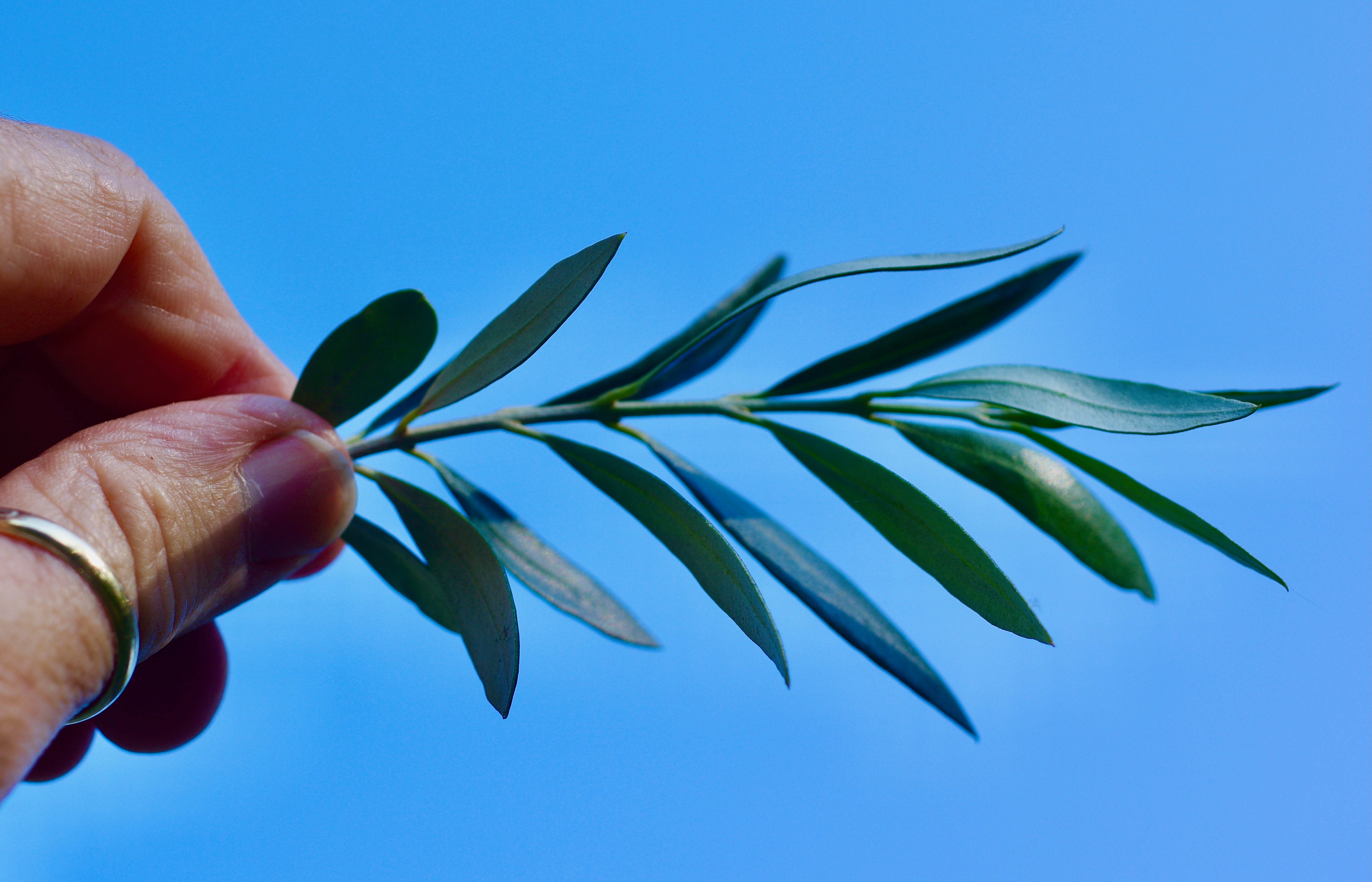
My unlearning began in college.
When I left the junkyard where I was raised and the conservative atmosphere of my deeply religious childhood home, I was lucky enough to find people who helped me unlearn many things.
I went off to a little Appalachian mountain college. There, in a local flora class, I met a woman named Dottie. Over trailing arbutus and Solomon’s seal, we became friends. One day Dottie took me to a health food store on the square in Dahlonega, Georgia. I’d never been in a health food store, never heard of health food.
“Rice has been bleached?” I asked Dottie.
“That’s why it’s white,” she said. “This is brown rice. No bleach.”
“I never knew,” I said. I’d been eating white rice my entire life—rice and gravy, tomatoes and rice, chicken and rice. “Real bleach?”
“Yes, bleach. White flour too,” she said.
“Flour has been bleached?”
(I think Dottie was wrong about the rice, that white rice isn’t bleached, but probably right about the flour.)
Dottie showed me nutritional yeast, turbinado sugar, tofu. We stayed a long time in the herb section.
A walk through a tiny shop changed me permanently. Suddenly I understood that nothing I had learned—nothing I had become accustomed to—nothing I had assumed—could be taken for granted. I understood that anything could have two stories. Usually one was dominant, the other hidden. I knew, from that moment forward, I would not be able to take any idea for granted. I would need to investigate its hidden story.
I would now need to decide for myself which story was important.
I began to understand that alternatives existed for almost everything I had learned, and it was my job to weigh the two: what I’d known as a child (white sugar) or its alternatives (honey, maple syrup, rice syrup).
I was nineteen.
My little college was a military school. On campus, loudspeakers daily sounded reveille, retreat, and taps. All around, out of respect, everyone stopped. They turned to face the flag. They saluted.
For a long time, for months, I stopped too.
But I was also beginning to see firsthand the crazy antics of drunken soldiers, the damage caused by hazing, the strangeness of blind obedience.
Then I found myself not stopping. Not putting my hand over my heart. Not saluting the flag.
I kept walking not because I lack respect for the flag, military veterans, soldiers who died in war, or our country, but because I was learning that the military is an institution that should not blindly be trusted.
I knew I was in the wrong place.
I met world-changers.
At the end of my second year, I transferred to Florida State to study writing. I moved into a Scholarship House near the football stadium. Lo and behold, not a half mile away, I found Leon County Food Co-op.
What in me, after all those years of Bible study, prayer, and fasting, sought wildflowers and health food and recycling?
At the food co-op, I landed in the whereabouts of people who worked for world change. These were the exact words they used, world change.
They were members of peace coalitions, food co-ops, land co-ops, and credit unions. They marched for civil rights, quit shaving their legs, drummed in circles on full moons, birthed at home, sent their children to alternative schools, came out of closets, didn’t pay war taxes.
By the time I was 21 years old, my world looked very different from the one I’d known all my childhood in southern Georgia.
During those heady, freedom-ringing days, I slid every idea, tradition, or belief under a microscope. Every day I threw out some old concept and adopted a new one.
out with the bras
out with any clothes at all
out with desks in rows
out with canned food
out with the Seminole mascot
out with men not being able to cry
out with women not being able to earn an equal salary
I started to find my voice.
So, during a time when I was working to find my voice as a writer, I was struggling to find my voice as a human being living in the 20th Century in the United States of America—a country founded philosophically on the ideals of freedom and democratic rights, but built ironically and tragically on subjugation and extermination of entire groups of living beings.
How we treat nature is oppressive.
By then I had fallen in love with the natural world.
I discovered very quickly a deep, almost disturbing passion for trees, for wild things, and for wild places. Nature had become my church, my university, my life. The more I learned, the more I fathomed how completely we humans are destroying the planet.
Passion channeled me toward activism: How could I not defend the wild places where I learned so much and found tremendous hope, comfort, and beauty?
I became an environmentalist. Then deeper I went.
All oppression is of a piece.
We’re all living in a glorious experiment called Life.
The more I studied, the more I saw clearly that environmental destruction is one of many forms of violence against Life.
Exploitation of nature parallels in theory and in practice every brand of oppression—racism, objectification of women, subjugation of native peoples, militarization of men, classism, genocide, and on and on.
So I became a social activist.
I decided I would not be silent.
Because silence looks a lot like consent.
I understood this: What we stand to lose by being quiet and complacent is greater than what we stand to lose by protesting.
I would need courage.
Courage is about being creatively empowered to take on the work of changing the course of history for the better.
“Better,” to me, means
more sustainable
more diverse
more democratic
more inclusive
more whole
more communal
more abundant
more peaceable
I am often afraid. This life, for me, has been a search for my own power and my own voice. I want to be careful not to cause damage with it.
However, when it comes to violence, oppression, and injustice, I will not turn my head and ignore.
May, during the next 250 years of democracy, our country move ever more quickly and surefootedly toward better.
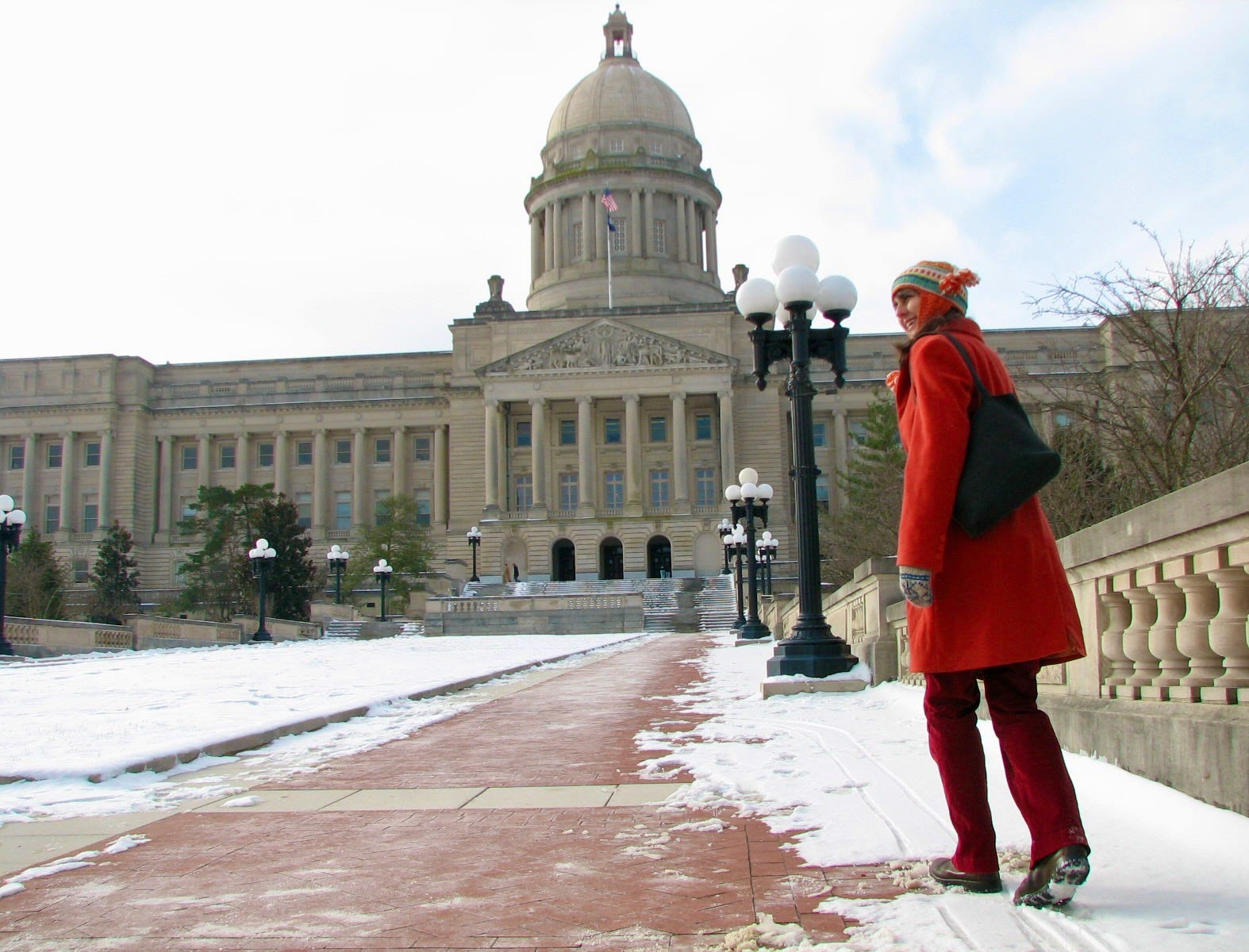
With this week’s essay, I introduce a new course—
Ground for Peace
For centuries we humans have studied war. We’ve spent billions on war. We’ve ravaged the planet for war.
What if we applied ourselves to peace in the way we apply ourselves to division?
Peace is treated as a default state, the thing that happens when nobody’s fighting. It is not treated seriously, not built strategically.
I will be offering a course to paid subscribers of this newsletter called “Ground for Peace.” Flash essays (very short), sometimes with a practice, will be delivered weekly for the next six months.
Here is where we study peace. Here is ground where peace lives.
I start from the premise that a world free of oppression, violence, war, and environmental and social injustice is not a distant utopia. It is buildable — now — by people willing to give peace the same rigor we’ve given war, by people willing to study courage, by people willing to take action.
What can you get from this work?
small studies that build your creative practice of peace
ways to find courage
ideas about personal power & creative empowerment
thoughts on how to take action, even or especially when the activism is the community you tend, the thing you make, the story you write
and maybe it will become something worth binding
To receive Ground for Peace, you will need to be a subscriber at the paying level, which is $33/year. If you are already a subscriber at the paying level, do nothing. I’ll send Ground for Peace to you.
And so, our course in courage, peace, and creative empowerment begins.
All Ebooks & Audiobooks Are $2.50 for the Holiday
All weekend, until Monday, July 6, all ebooks and audiobooks available on my website are priced at $2.50 in celebration of the anniversary of our country’s independence.
This offer includes The Woods of Fannin County, Craft & Current, and Journey in Place, as well as the ebook only of Ecology of a Cracker Childhood.
Once you purchase an ebook or audiobook, you receive an email from BookFunnel, which serves as my distribution center. If you don’t see an email, check spam. The e- and audio-versions of these books can be downloaded quickly and easily from BookFunnel onto your listening and reading devices. BookFunnel offers great customer service if you run aground.
All audiobooks were narrated by me.
Janisse, I love this piece. Loved reading about your “awakening.” I can relate on so many levels.
Back around ‘89 when I was a grad student at FSU, I read my “wild poetry” at Finales one night while holding Daisy, a disabled opossum, on my lap. You sat up front — a beautiful, dark-haired young woman with the biggest smile I had ever seen. I didn’t know who you were until I met you much later in a writer’s group with Sue Cerulean. I could never forget that smile.
I’ve read, listened to, thoroughly enjoyed and shared all your books. Thank you for that. And I love the path you’ve chosen.❤️
I loved your Declaration of Independence Janisse. Spoke to me on several levels. Don’t know if you recall but I am a professional forester up here in central Massachusetts, a little further east than where Silas lives if he’s still in Northampton. I’ve worked in nature for 50 years and am slowly winding down my career. My politics are consistent with social democracy and centered on the wellbeing of people and the planet. Peace as a proactive pursuit makes very good sense to me as well. Keep up the excellent work of writing and teaching. It’s always enjoyable to read your posts. I think it’s been more than 4 years now since I started following you. It’s helped me stay hopeful throughout the horrific damage done to the country and to so many good people these last 2 years. I am grateful.